The Beekeeper
Twelve
Years
in the Hive
I'm Jason Paris, and it didn't start with a plan to become a beekeeper. It started with a conversation, a friend's mother getting into bees, and an offer to help. Twelve years later, the bees are still teaching me.
Over twelve years ago I helped a friend's mother start her first colony. We drove up to Brushy Mountain Bee Farm, gone now but a landmark for beekeepers in these parts, and came home with two packages. I had no particular claim to bees at the time. No hives, no suits, no ambitions of becoming a beekeeper. Just curiosity, a willingness to show up, and an afternoon I've never forgotten.
That was the spark. The thing about bees is they don't let you stay a casual observer for long. There's too much going on inside a hive. Too much order, too much intention. Once you start seeing it, you can't stop looking.
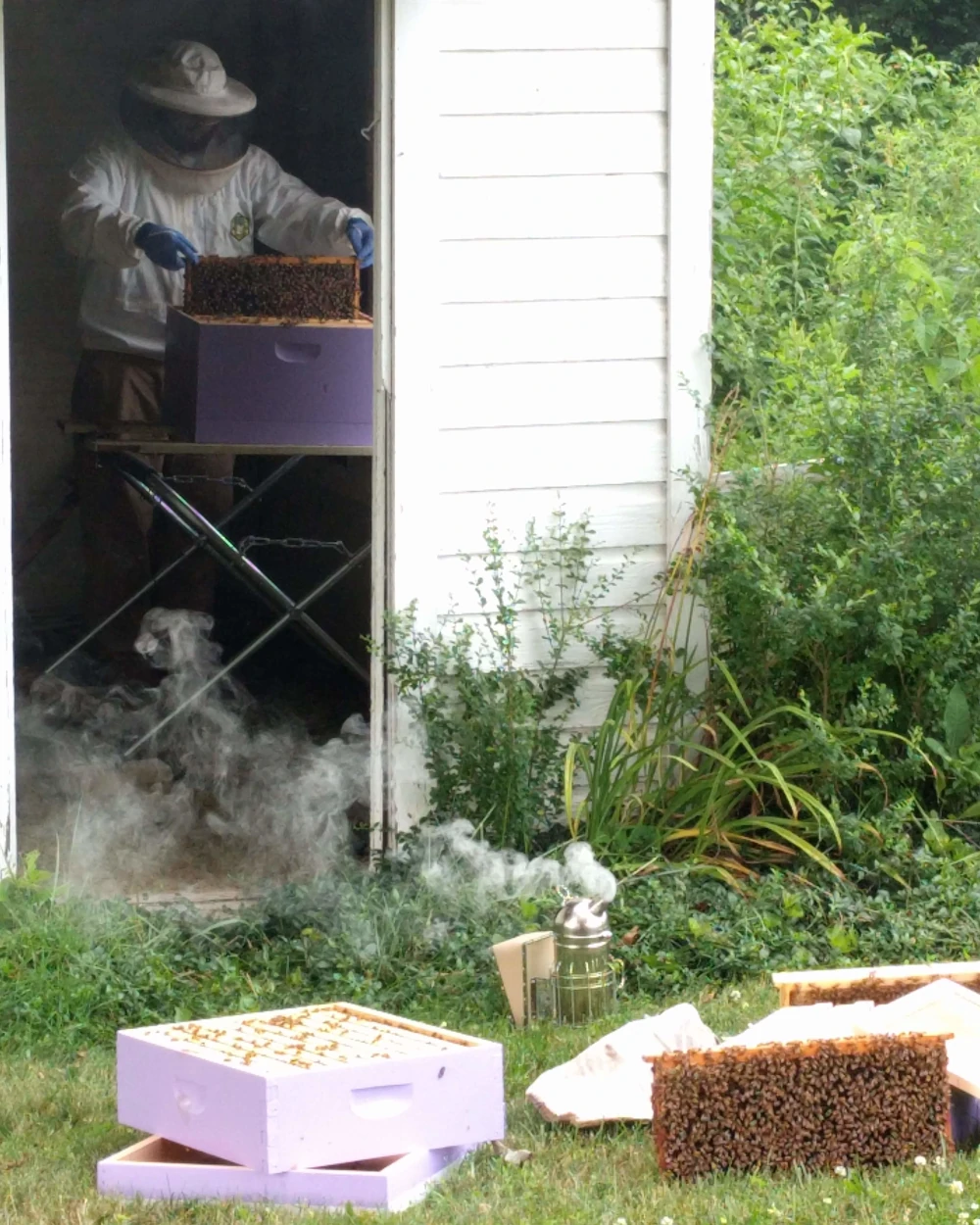
When we moved into our place in Pinnacle, the bees were already there. A colony had taken up residence in the outbuilding. Long-established, unbothered, completely indifferent to our arrival.
A member of the Stokes County Beekeepers Association came out and helped me cut them out and get them into a proper hive. It was messy, unplanned, and exactly the kind of thing that commits you to something without your full consent.
That hive didn't make it through winter.
I was hooked anyway.
I purchased two nucleus colonies from a local beekeeper. My first intentional hives. From there the education accelerated. I've caught swarms and lost swarms. I've tried to prevent them through splits, and learned when to call in another beekeeper who knew more than I did. The community around beekeeping is generous that way.
Queen rearing is what really has me. I'll select a colony I like: good temperament, strong build-up, low mite load. Then I graft from her and watch. There's something quietly addictive about checking grafts, seeing which cells the bees have drawn out, knowing that something is happening in there that I only partly control.
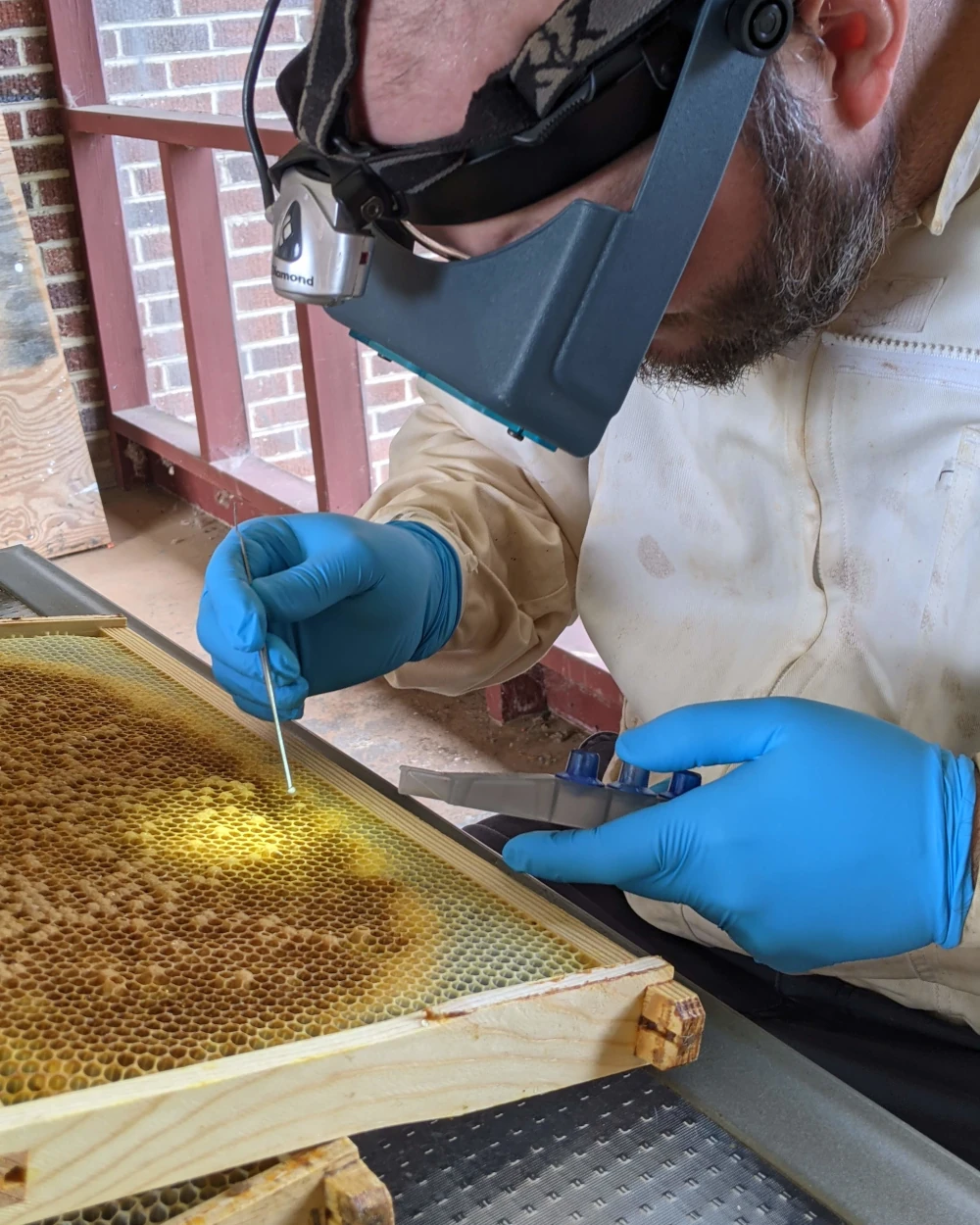
Every time I open a mating nuc, it's Schrödinger's queen. Until I lift that lid, she's healthy, mated, and laying.
In 2023, Don Hopkins, North Carolina's state apiarist, came out to inspect my hives. He had been my neighbor growing up, a reminder that beekeeping had been around me long before I was ever part of it.
That same year I sold nucleus colonies for the first time. Nucs had always been part of how I managed the apiary, but selling them meant standing behind the quality of the bees in a different way. It raised the stakes on everything upstream: stock selection, queen rearing, colony health going into spring buildup.
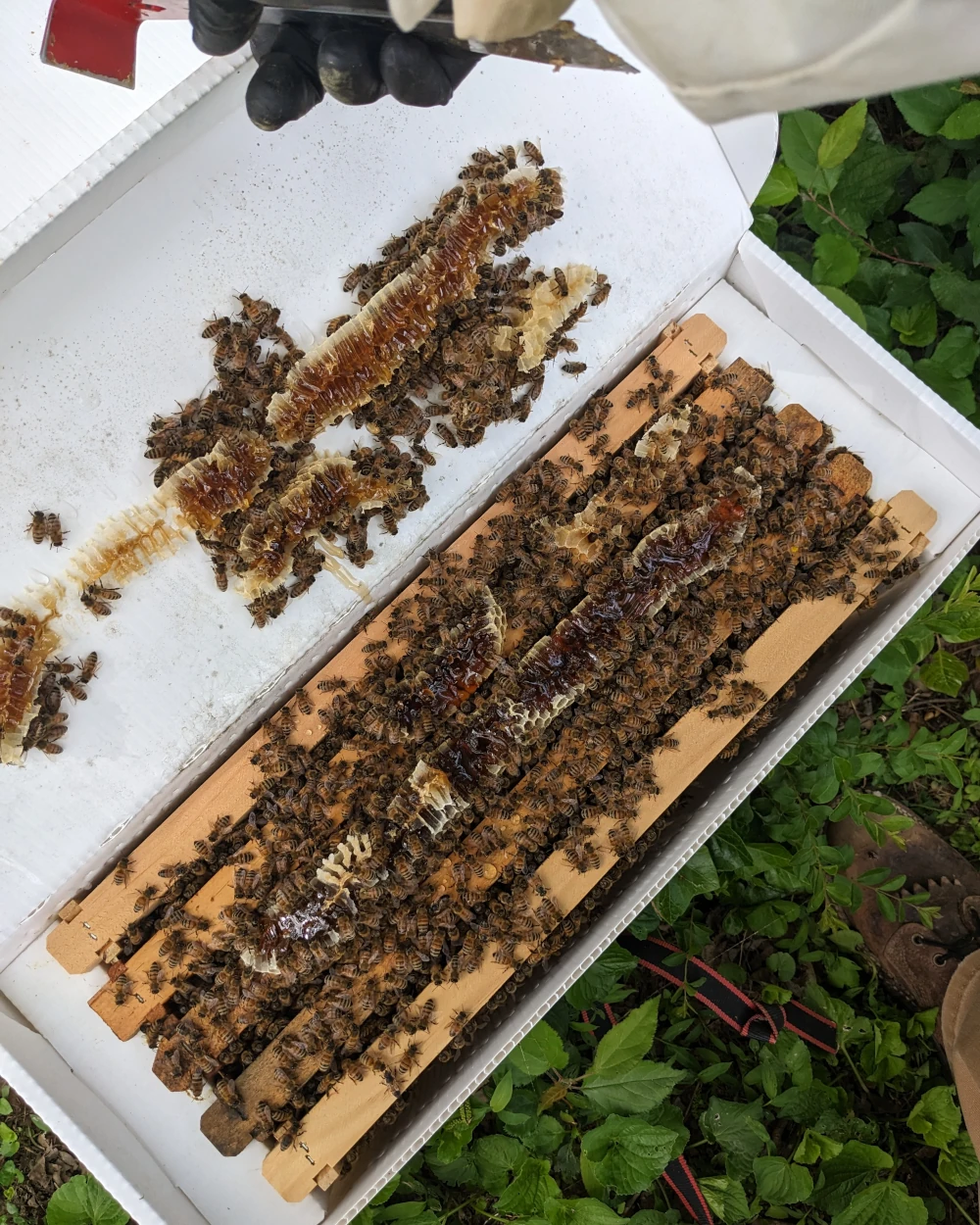
Today Wildfire Apiary produces raw, unfiltered honey from hives working the Piedmont foothills of North Carolina. The season starts with maples in early spring, builds through wildflower, and peaks with the tulip poplar flush before the summer dearth sets in. Harvested and bottled the way honey should be.
When the season allows, I sell nucleus colonies and mated queens to local beekeepers. Queen quality matters to me in a way that's hard to explain without sounding obsessive, so I'll just say the stock is selected carefully and leave it at that.
I'm a certified beekeeper through the NC Beekeepers Association and an active member of the Stokes County Beekeepers Association, currently serving as webmaster and previously as secretary. The local beekeeping community is where most of my knowledge came from, and giving back to it matters.
Wildfire Apiary is named for my wife and the wildland firefighters she works alongside. They fight fire when it threatens and wield it as a tool when the land needs it. Their work protects communities, wildlife, and our native ecosystems. The name is a small tribute to work that most people never see and even fewer understand.
Fire also shapes the land the bees forage. To learn more about the regenerative role of fire in the landscape, see Fire & Forage.
Fire & Forage →